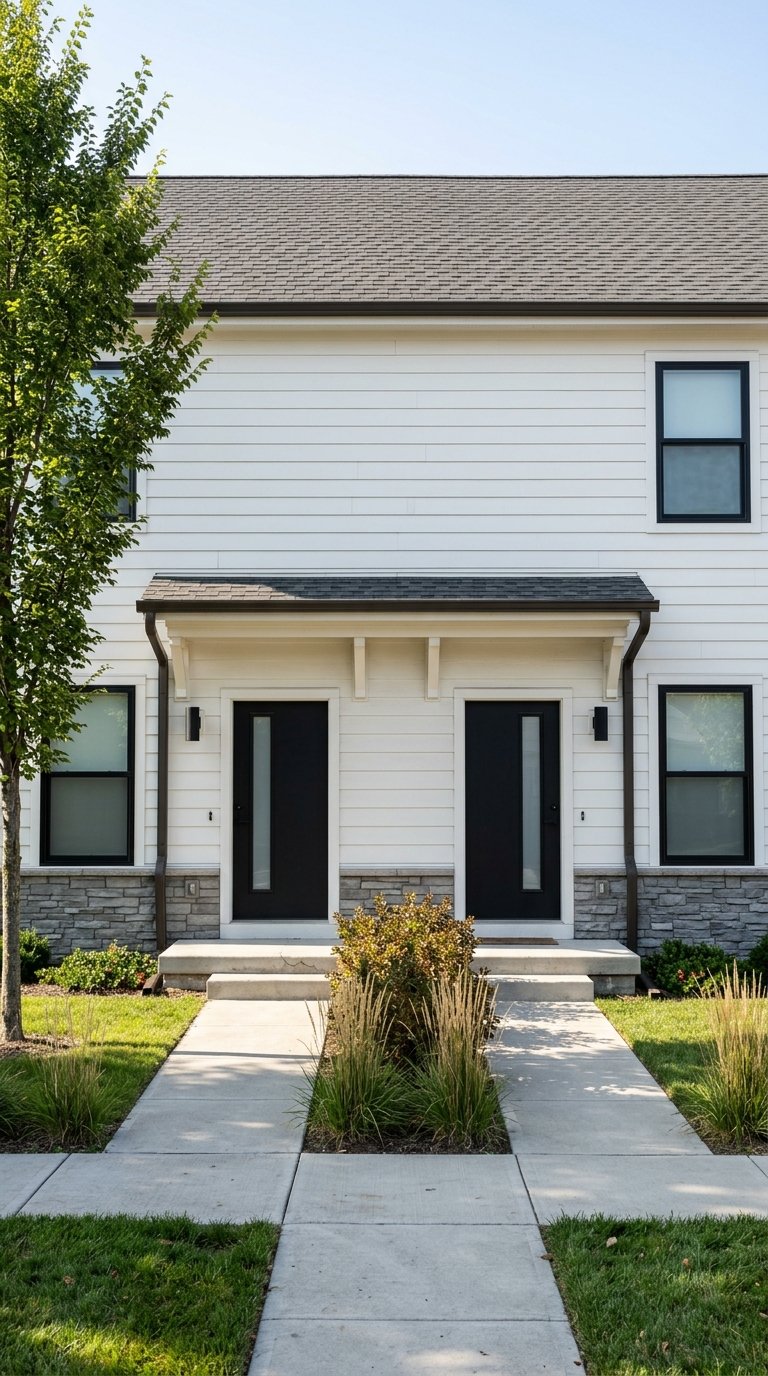
How To Evaluate Rental Homes In Greeley
July 9, 2026
July 9, 2026
If you are looking at rental homes in Greeley, it is easy to get pulled in by the asking price or the advertised rent. But a property that looks strong on paper can quickly feel different once you factor in taxes, vacancy, repairs, and the realities of Greeley’s local market. The good news is that with the right framework, you can evaluate rental homes with more confidence and make smarter decisions. Let’s dive in.
Before you evaluate any one property, it helps to understand the citywide numbers. Census Bureau data for Greeley shows a population of 115,073, a 60.9% owner-occupied rate, median household income of $69,881, median gross rent of $1,388, and median owner-occupied home value of $402,500. The same data also shows that 83.4% of people lived in the same home one year earlier, which can offer useful context when you think about tenant stability and turnover.
Current market snapshots add another layer. Zillow shows an average home value of $422,689 and an average asking rent of $1,545 in Greeley, with about 398 available rentals. Using those figures, the rough gross rent yield is about 4.4% before you account for taxes, insurance, vacancy, repairs, management, and financing.
That means one important thing: in Greeley, the deal often depends on disciplined underwriting, not just a quick rent estimate. A home that looks similar to another on the surface may perform very differently once you review its condition, tax bill, and lease-up risk.
Greeley is not one single rental submarket. If you only use citywide averages, you may miss important differences between neighborhoods and price points.
For example, Zillow shows 80631 with an average home value of $368,676 and average rent of $1,345. In 80634, the average home value is $449,744 and average rent is $1,590. That implies rough gross yields of about 4.4% in 80631 and 4.2% in 80634.
Those numbers are close enough that the better investment may not be the one with the highest advertised rent. It may be the one with better condition, more predictable maintenance, or a more favorable property tax picture.
One of the biggest mistakes investors make is assuming a property will rent immediately at the top end of the market. In Greeley, that assumption deserves a closer look.
Zillow currently describes Greeley’s rental market as “cool,” with about 398 available rentals and average rent basically flat year over year. That does not mean you cannot find a good rental opportunity. It does mean you should be careful about building your numbers around aggressive rent growth or zero downtime.
When you evaluate a property, ask yourself:
A realistic rent assumption is more useful than an optimistic one. In a market with available inventory, lease-up time matters almost as much as monthly rent.
A simple first pass is to calculate gross yield. This gives you a quick way to compare one property to another before you dig deeper.
Use this basic formula:
Using current Greeley averages, $1,545 in monthly rent equals $18,540 per year. Compared with an average home value of $422,689, that produces a rough gross yield of about 4.4%.
This number is helpful, but it is only a starting point. Gross yield does not include operating expenses, financing, vacancy, or maintenance. It is best used as a screening tool, not a final decision metric.
Once a property passes your first screen, the next step is to estimate recurring expenses. This is where many rental evaluations become more realistic.
IRS Publication 527 lists common rental expenses such as:
As you build your numbers, separate one-time acquisition costs from ongoing operating costs. Your goal is to understand what the property may cost to hold and operate over time, not just what it costs to buy.
In Greeley, property taxes should never be treated as a generic estimate if you are serious about evaluating a rental. Weld County makes clear that its tax calculator is only an estimate, mill levies can change every December, and the official tax bill is issued at the end of January.
That means two homes with similar prices may carry different tax burdens. Before you move forward, use Weld County’s property tools to review the specific parcel and confirm the most accurate tax information available for that address.
This step matters because taxes can change your cash flow more than many buyers expect. Parcel-level due diligence is part of smart investing in Weld County.
Not every cost should be treated the same way. If you are evaluating a property that needs work, it is important to understand the difference between repairs and improvements.
According to IRS Publication 527, repairs and maintenance are generally deductible if they do not have to be capitalized. Improvements, on the other hand, must generally be capitalized. The IRS lists examples of improvements such as a new roof, furnace, central AC, wiring upgrades, plumbing and water heaters, insulation, and kitchen modernization.
Why does this matter during your evaluation? Because a home that needs several major system updates may require more cash than the purchase price suggests. A cosmetic fixer and a systems-heavy fixer are not the same investment.
Greeley has a mix of historic areas, early residential neighborhoods, midcentury subdivisions, and newer suburban growth. That variety creates opportunity, but it also means maintenance risk can vary a lot from one property to the next.
Older homes often bring more uncertainty around system age, prior renovation quality, and deferred maintenance. Newer homes may come with higher purchase prices, but they may also reduce the chance of immediate capital projects after closing.
As you tour homes, pay close attention to:
A lower purchase price can lose its appeal quickly if major systems are nearing replacement.
If you are considering an older property, take one more local step before finalizing your numbers. The City of Greeley notes that if a property is on the Greeley Historic Register, exterior alterations, moving, demolition, and major exterior repairs or reconstruction can trigger review.
That does not automatically make the property a poor investment. The city also notes possible benefits such as low-interest loans, permit refunds, grants, and the Colorado Historic Preservation Income Tax Credit. Still, register status can affect renovation scope, timing, and budgeting.
If your plan depends on exterior upgrades, make sure you understand that status early. It is much better to learn that before you make an offer than after closing.
A strong rental evaluation should include more than the listing sheet. Weld County’s property information portal allows searches by owner name, address, account number, subdivision, parcel number, section township range, or API number.
That makes it a useful tool for checking property characteristics and valuations before you commit. You can use it as part of your due diligence to compare the listing details with parcel-level information and make sure the basics line up.
This habit is especially useful when you are reviewing older homes, unique lots, or properties where the marketing description feels light on details.
Even a well-kept rental home can have downtime between tenants. In Greeley’s current rental environment, that risk should be part of your evaluation from the start.
With Zillow describing the rental market as cool and rents roughly flat year over year, it is wise to model some vacancy and lease-up time. Do not assume every property will be occupied immediately at your target rate.
A more durable underwriting approach includes:
Conservative assumptions can protect you from overpaying. They also help you compare opportunities more honestly.
The best rental home in Greeley is not always the one with the highest projected rent or the cheapest price per square foot. Often, it is the property that balances realistic rent, manageable maintenance, verified taxes, and a sensible path to steady occupancy.
In today’s market, that means looking beyond headline numbers. You want to evaluate each home through a local lens and pressure-test your assumptions before you buy.
If you want help sorting through rental opportunities in Greeley or evaluating a specific property with local market context, connect with The Group Inc. A data-driven second opinion can help you move with more clarity.
Stay up to date on the latest real estate trends.
With a passion for real estate and a commitment to community betterment. We have consistently demonstrated exceptional expertise and dedication, earning recognition as one of America's Best Real Estate Professionals, ranking within the top 1.5% according to Real Trends.